Directional Antennas An antenna is known as “directional” if its pattern strongly favors a certain direction. A directional works by concentrating the signal in one direction at the expense of other directions. It is also commonly referred to as the “Beam” antenna. I am going to start with the earliest type of beam discovered, the…
Tag: Antenna Basics
Performance Tips – Earth Ground
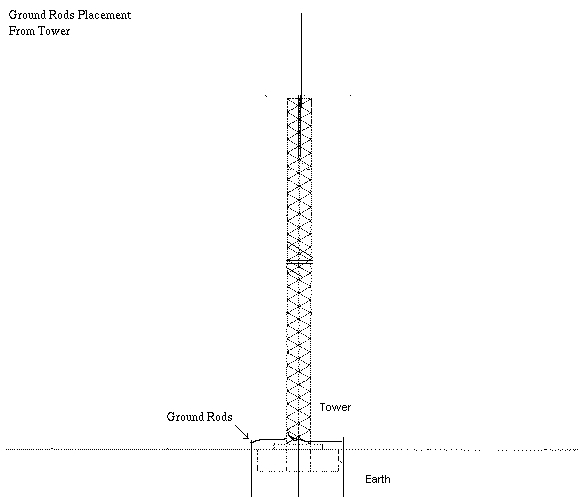
Earth Ground Most of us overlook the importance of hooking good earth grounds to our antennas and our radios. Some think if lightning hits, its going to do what it wants to do. Probably right! Lightning protection is not why I am stressing the earth ground. Good earth grounds serve two purposes. One they protect…
Antenna Performance : Angle of Radiation
Angle of Radiation Most of us think that our antenna’s “shoot” the signal straight off the end (if its a beam), at right angles from the antenna. I have even seen some operators (mainly ones who live in valleys) bend their mast so that their antenna does not sit with the boom parallel to the ground…
Antenna Performance : co-phasing
Co-Phasing Co-phasing or “stacking” has long been a way to get high gain from antennas. Co-phasing involves placing two (or more!) identical antennas either side-by-side or one over top another (“stacking”) at a certain distance apart (usually a 1/2 Wavelength or more) and feeding the antennas in-phase. The result is 3 db more than just…
Antenna Basics
Antenna Basics Radio Waves Radio energy waves are waves of energy that are similar to light waves. In fact signals (radio waves) travel through the air at the speed of light. To understand how an antenna works you must first have a basic idea of the makeup of a radio wave. A radio wave can…